Discomfort
Stress, loneliness, boredom, fatigue or a demanding task creates internal pressure.
BEHAVIORAL HEALTH · HABIT & SELF-REGULATION
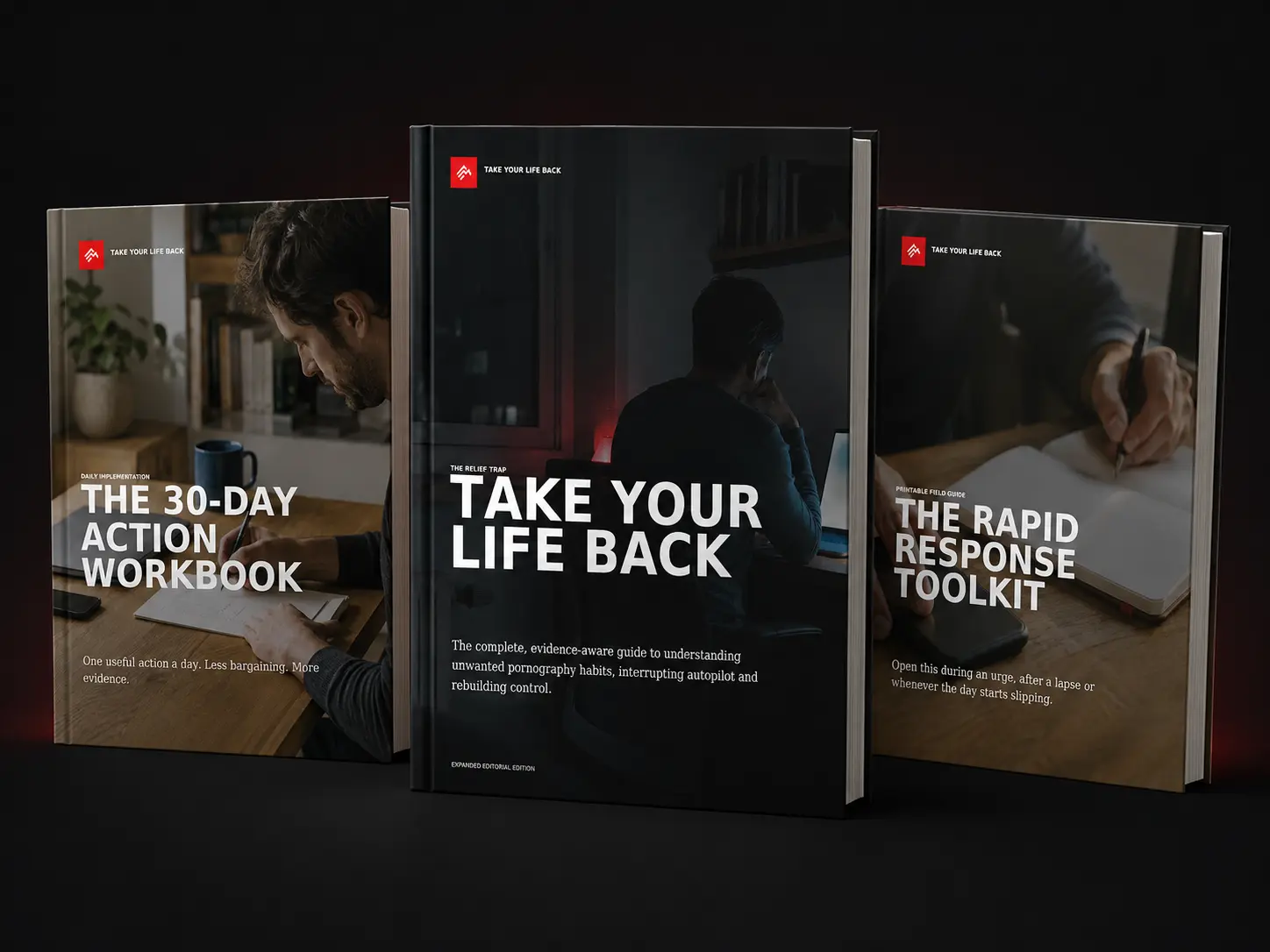
A private, evidence-informed system for understanding unwanted pornography habits, identifying the situations that maintain them and developing a more deliberate response over 30 structured days.
One-time payment · Immediate private access
This resource does not pathologize sexuality or claim that masturbation is inherently harmful. It focuses on repeated loss of choice, distress and meaningful interference with daily life.
RECOGNIZING THE PATTERN
A behavior can feel sudden while still being highly patterned. When the same response repeatedly follows stress, boredom, loneliness, fatigue or avoidance, the brain begins learning that this route offers fast relief. That learned association can become easier to activate and harder to interrupt.
THE MECHANISM
Willpower is not a fixed character trait. It fluctuates with stress, sleep, emotional load, access and context. A more reliable strategy is to understand the sequence and change what happens before the decision becomes urgent.
Stress, loneliness, boredom, fatigue or a demanding task creates internal pressure.
A place, time, thought or device activates a familiar route toward relief.
The behavior reduces tension briefly, reinforcing the sequence for the future.
Avoidance, regret and reduced self-trust become part of the next cycle of discomfort.
THE SCIENCE, WITHOUT THE HYPE
Dopamine is frequently described online as a chemical that becomes “depleted” or “damaged.” That explanation is misleading. Dopamine participates in learning, motivation and the anticipation of reward. When a behavior repeatedly produces rapid relief, cues associated with that behavior can begin attracting attention before a conscious decision is made.
This does not mean the brain is permanently damaged. It means the response has been practiced. Because learned patterns remain sensitive to context, change becomes more realistic when a person identifies cues, adds friction, practices an alternative response and prepares for lapses without turning them into total abandonment.
WHAT YOU RECEIVE
The core guide explains the pattern, the rapid tool supports the difficult moment and the workbook creates enough structure for repeated practice.

01 · CORE GUIDE
A clear explanation of the relief loop, reward learning, triggers and the practical architecture of behavior change.
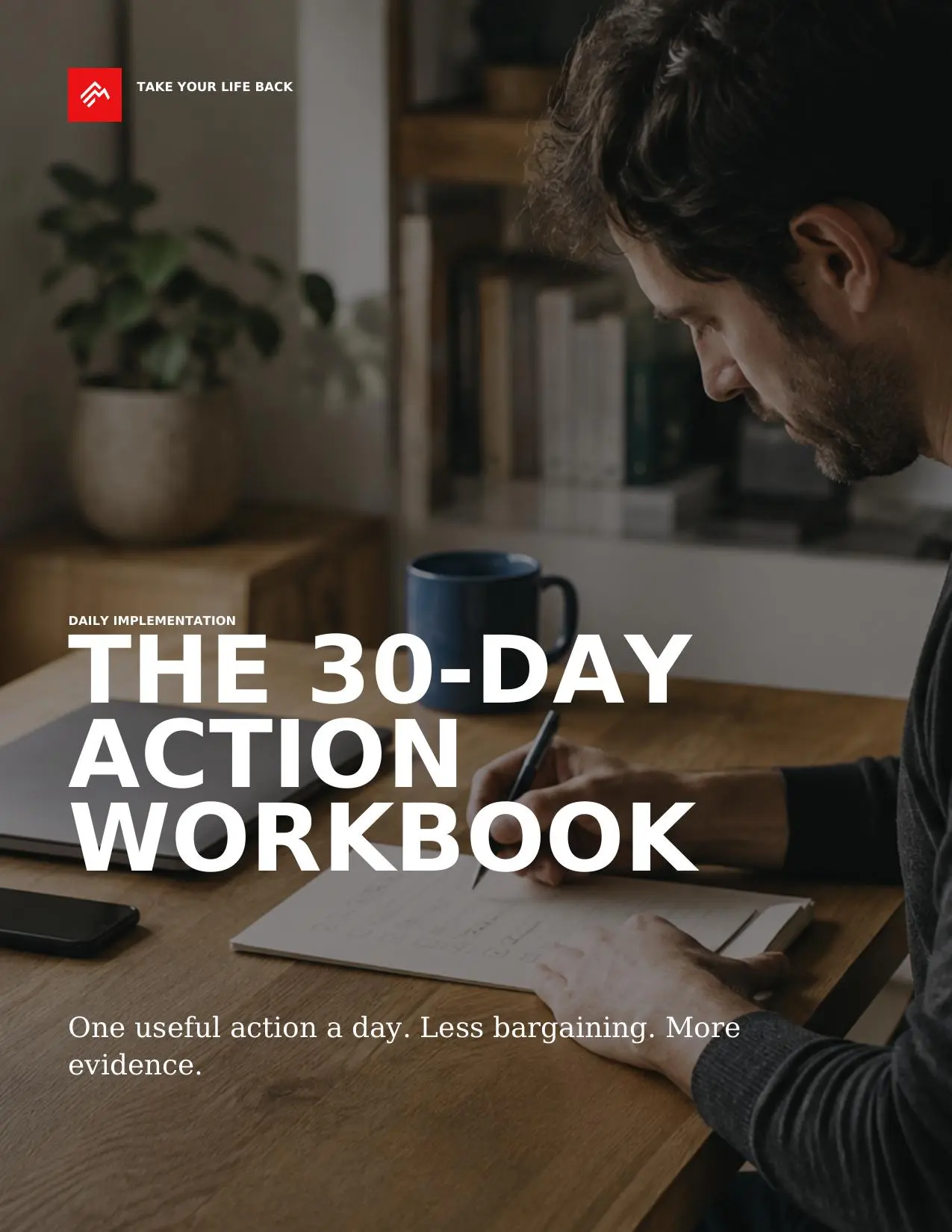
02 · GUIDED PRACTICE
Daily observations, trigger mapping and structured exercises that turn insight into repeatable action.
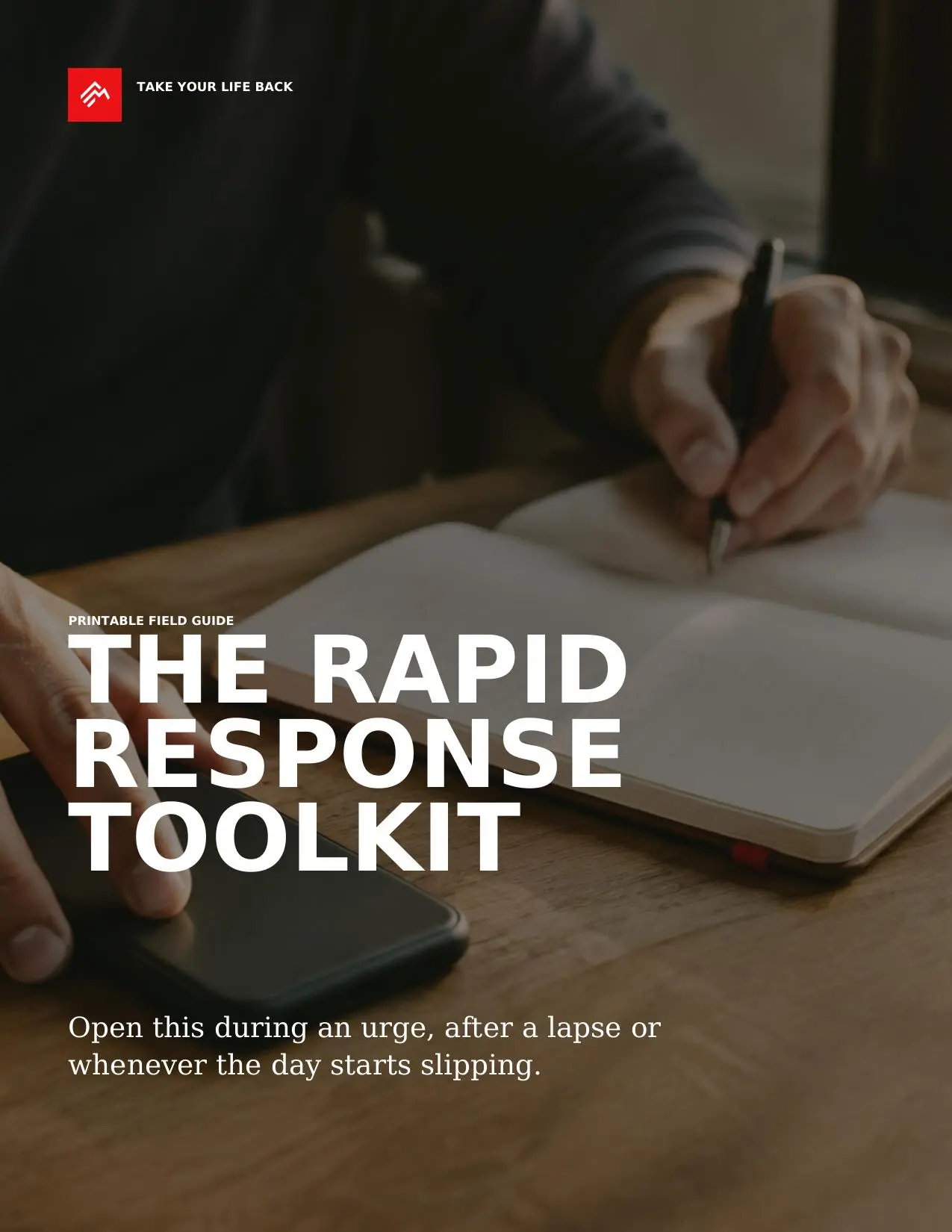
03 · USE IN THE MOMENT
Short protocols for urges, negotiation, lapses and the moments when clear thinking becomes more difficult.
THE PRACTICAL PROCESS
Map what happens before, during and after the behavior without reducing yourself to the behavior.
Create distance between a cue and the automatic response using practical friction and a defined protocol.
Build alternative methods of regulation that address the discomfort instead of only suppressing the urge.
Use the 30-day structure to strengthen a different response and learn from setbacks without shame.
PRIVATE DIGITAL ACCESS
Receive the 74-page Core Guide, 39-page Action Workbook and 12-page Rapid-Response Toolkit immediately after purchase. Anonymous community access is included at no additional cost.
FREQUENTLY ASKED QUESTIONS
This resource is designed to support informed self-guided work. It is not a replacement for professional assessment, psychotherapy or emergency care.
No. This is an educational self-help resource. It does not diagnose or treat a mental-health or medical condition and does not replace individualized professional care.
No. The resource focuses on repeated loss of choice, distress and meaningful life impact. Frequency alone does not establish a disorder, and masturbation is not inherently pathological.
The system does not depend on one more burst of motivation. It helps you study the conditions surrounding the behavior and prepare for the moments when motivation is likely to be low.
A lapse is treated as information. The toolkit helps you identify the cue, make an immediate repair and return to the plan without turning one event into a longer period of abandonment.
Three English-language digital PDF resources totaling 125 pages, plus access to the private anonymous community.